Socrates, Plato, and Aristotle: The Philosophers Who Built the Western Mind

Thomas L. Miller
Historian & Writer
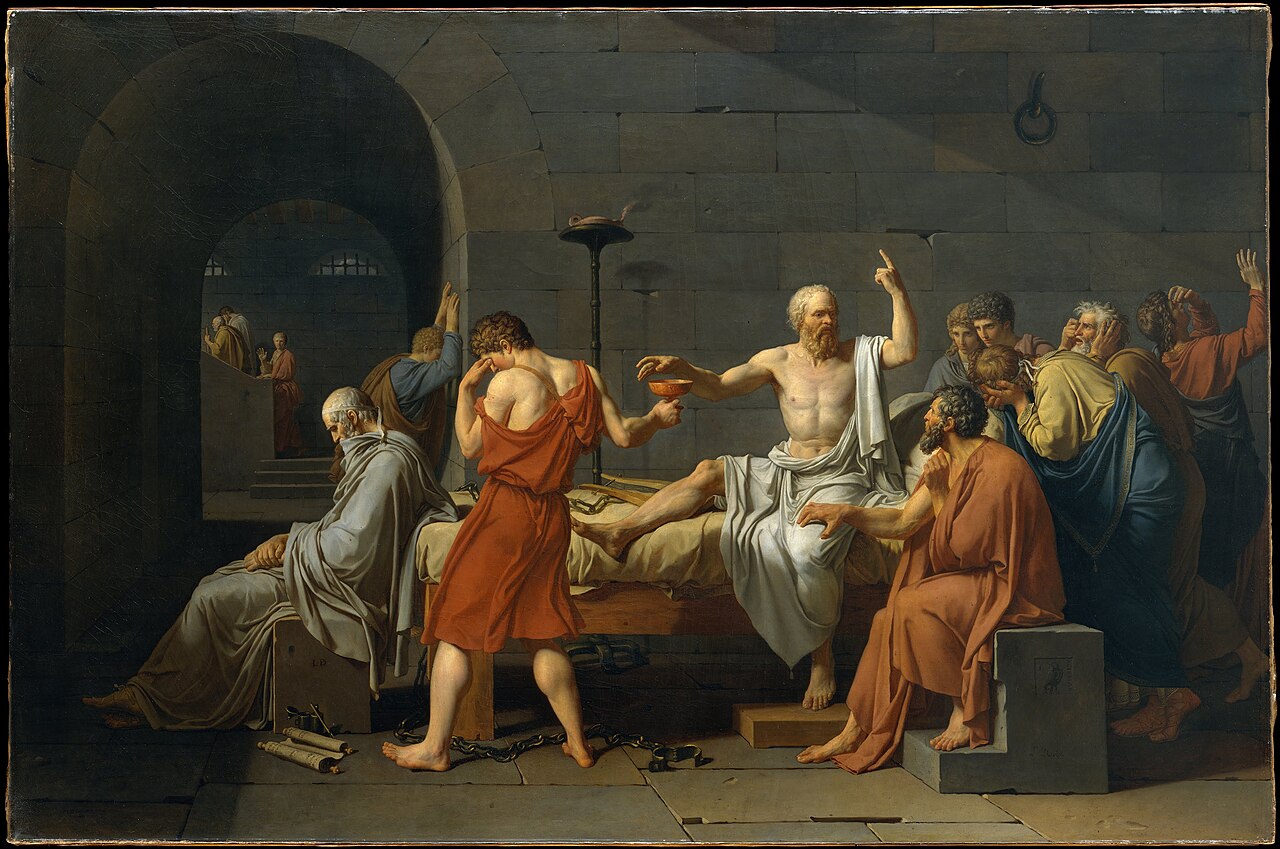
Socrates (470–399 BCE) wrote nothing. Everything we know about him comes through the writings of his students, primarily Plato, and secondarily Xenophon. He was an Athenian stonemason's son who spent his life in philosophical conversation in the streets, markets, and gymnasiums of Athens, claiming to know nothing and to be useful only in helping others discover how much they didn't know either. This was the famous "Socratic method" of elenctic questioning. He was ugly, poor, and relentlessly committed to the proposition that the examined life was the only life worth living. In 399 BCE, he was tried by a jury of 500 Athenian citizens on charges of impiety and corrupting the youth, convicted by a small margin, and condemned to death by drinking hemlock. His calm acceptance of the sentence, refusing to flee when he could have, became the founding act of Western philosophy's self-conception as the love of wisdom even unto death.
Plato (427–347 BCE) was Socrates's most brilliant student and the philosopher who made Greek philosophy a permanent force in Western intellectual history. He founded the Academy in Athens, the first institution of higher learning in the Western world, and wrote philosophical dialogues in which Socrates appears as the main character. The dialogues cover virtually every area of philosophy: metaphysics (the Theory of Forms, the idea that the world we perceive is a shadow of a perfect, unchanging reality), epistemology (how we know things), ethics (how we should live), political philosophy (The Republic, where he describes the ideal city-state governed by philosopher-kings), and aesthetics. Plato's influence is so pervasive that the philosopher Alfred North Whitehead famously described the entire European philosophical tradition as "a series of footnotes to Plato."
Aristotle (384–322 BCE) was Plato's greatest student and his most significant intellectual opponent. Where Plato sought reality in abstract, perfect Forms beyond the material world, Aristotle was an empiricist who insisted that knowledge begins with observation of the physical world. He studied biology, physics, astronomy, psychology, ethics, politics, rhetoric, and literary criticism, creating the foundational texts in most of these disciplines. His Nicomachean Ethics developed the concept of eudaimonia (flourishing or happiness) achieved through virtue and rational activity. His Politics analyzed and classified 158 different Greek constitutions. He tutored the young Alexander the Great, an apprenticeship that helped shape one of history's most consequential rulers.
Together, these three thinkers established the questions about knowledge, reality, virtue, justice, and the good life that philosophy has been answering (or arguing about) ever since. Medieval Islamic and Christian thinkers worked within frameworks derived from their writings. The Enlightenment philosophers engaged explicitly with their arguments. The founding documents of modern democracies reflect their political ideas. In a very real sense, every time a person asks "but is that really true?" or "but is that really right?", practicing the Socratic habit of questioning assumptions, they are continuing a conversation that began in the streets of fifth-century Athens.