The Persian Wars: The Battle for Western Civilization

Thomas L. Miller
Historian & Writer
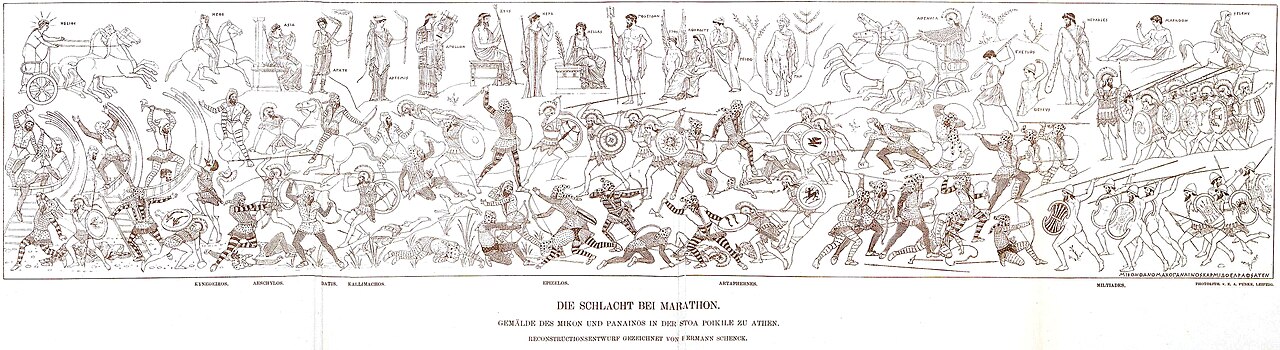
The Persian Wars, the conflicts between the Achaemenid Persian Empire and the Greek city-states between 499 and 449 BCE, are among the most consequential military conflicts in world history. They began with the Ionian Revolt (499–493 BCE), in which the Greek cities of western Anatolia under Persian rule rebelled, supported briefly by Athens and Eretria. The Persians suppressed the revolt and then turned their attention to punishing the mainland Greeks who had aided the rebels. Under Darius I, a large Persian fleet landed at the bay of Marathon in 490 BCE and was met by an Athenian army that was outnumbered but used superior tactics and the advantage of heavily armored hoplites to route the Persians decisively. According to legend, the runner Pheidippides covered the 26 miles from Marathon to Athens to announce the victory with his final breath, hence the modern marathon race.
The Second Persian invasion (480–479 BCE) was on a vastly larger scale. Darius's son Xerxes assembled an enormous army (ancient sources claim millions; modern estimates range from 100,000 to 300,000) and marched it through Thrace and Macedonia into Greece. The decisive early land engagement came at Thermopylae, where the narrow pass was held by Leonidas's 300 Spartans and their allies for three days (see also our post on Sparta). The naval battle at Artemisium was fought simultaneously. After Thermopylae fell and the Persians advanced on Athens, the Athenians followed the Oracle at Delphi's advice, evacuated their city, and concentrated their naval power. Athens was burned.
The turning point of the entire war came in the narrow straits of Salamis in September 480 BCE. The Athenian commander Themistocles lured the Persian fleet into the narrow waters where their numerical advantage was negated, and the smaller, more maneuverable Greek triremes destroyed the Persian fleet in a day-long battle. Xerxes, watching from a golden throne on the hillside above, saw his naval power broken. He retreated to Persia with most of his army, leaving his general Mardonius to winter in Greece. The following summer, at the Battle of Plataea (479 BCE), the Persian land forces were decisively defeated by a Greek alliance led by the Spartan regent Pausanias. The invasion was over.
The Persian Wars became the central event in Greek historical memory, the moment when the free city-states of Greece defeated the greatest empire in the known world. Their significance is hard to exaggerate: if Persia had won, the Athenian democracy, the philosophical tradition, the dramatic tradition, and the artistic achievements of the classical period might never have developed as they did. The Western tradition of depicting the wars as a conflict between Eastern despotism and Western freedom is, of course, an oversimplification, as Persian governance was often more tolerant and sophisticated than this framing suggests, but the Greek victory did preserve the particular conditions in which the classical flowering occurred. Herodotus, the "Father of History," wrote his Histories primarily as an account of the Persian Wars, establishing historical writing itself as a discipline in the process.