Jason and the Argonauts: The First Great Quest

Thomas L. Miller
Historian & Writer
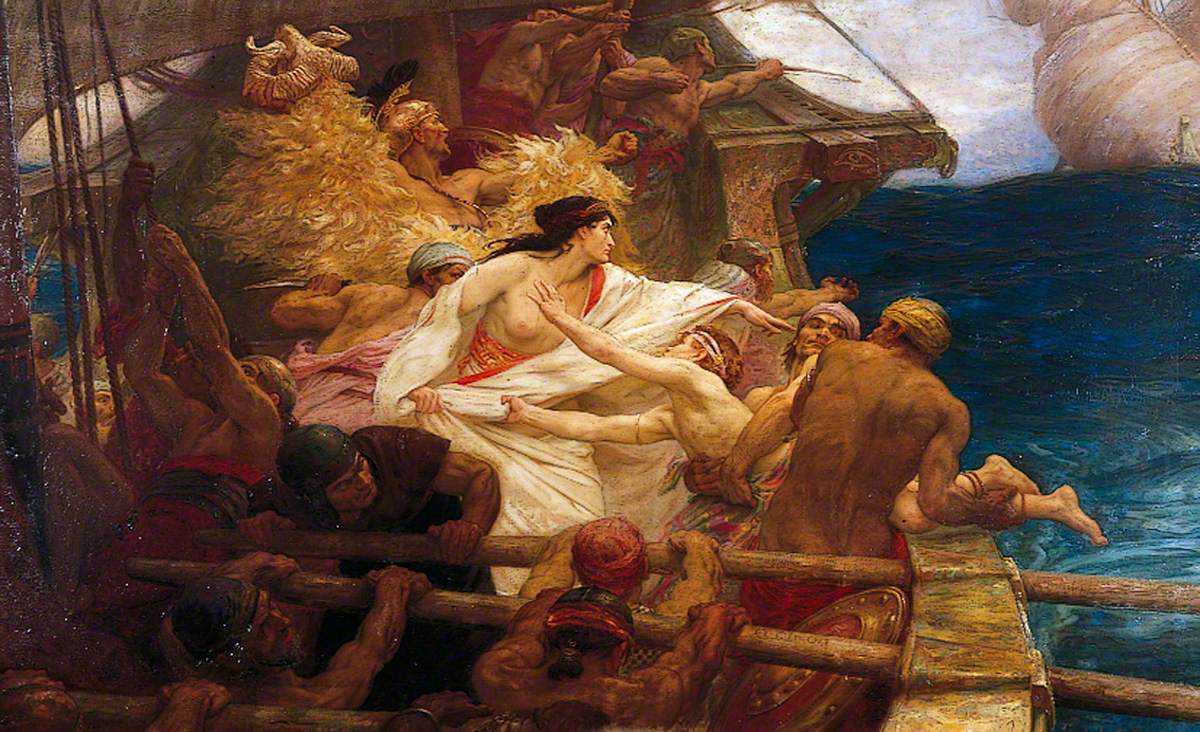
The story of Jason and the Argonauts belongs to the generation of heroes just before the Trojan War, a time, in the mythological imagination, when the boundary between the human and divine was more permeable, when gods walked among mortals and monsters still lurked at the edges of the known world. Jason was the rightful heir to the kingdom of Iolcos in Thessaly, whose throne had been usurped by his uncle Pelias. The Oracle at Delphi had warned Pelias to beware "the man with one sandal," and when Jason arrived at court having lost a sandal crossing a river (where he had helped an old woman across, actually the goddess Hera in disguise), Pelias recognized the threat and sent him on an impossible mission: to retrieve the Golden Fleece from Colchis, at the far eastern end of the Black Sea.
Jason's response was to build the greatest ship the world had ever seen, the Argo, designed by the craftsman Argus with the help of Athena, who incorporated a plank from the sacred oak of Dodona that could speak prophecy, and to assemble an all-star crew of heroes: Heracles, the strongest man alive; the twin brothers Castor and Polydeuces (the Dioscuri, sons of Zeus); Orpheus, the divine musician; Calais and Zetes, winged sons of the north wind; Theseus (in some versions); Atalanta, the great huntress; Peleus (who would father Achilles); and many others. The crew were called the Argonauts ("those who sail on the Argo"), and their collective adventures en route to Colchis, dealing with the women of Lemnos, freeing the prophet Phineus from the Harpies, passing through the Clashing Rocks of the Symplegades, became a mythology of exploration and cooperation.
At Colchis, King Aeetes agreed to surrender the Golden Fleece only if Jason could complete seemingly impossible tasks: yoking two fire-breathing bulls, plowing a field, and sowing dragon's teeth from which armed warriors would spring. The king's daughter Medea, a sorceress of extraordinary power and a priestess of Hecate, fell in love with Jason (aided by Eros's arrow at Aphrodite's request) and used her magic to help him complete each task. She then helped him seize the Fleece, killing the sleepless dragon that guarded it with a drugging potion, and fled with the Argonauts, taking her brother Absyrtus aboard. In the most disturbing version of the myth, she killed and dismembered her brother to slow her father's pursuit, scattering his body parts so Aeetes would have to stop to gather them for burial.
The return voyage was as adventurous as the outward journey, with the Argonauts passing through various dangers including the Sirens (Orpheus drowned them out with his lyre), Scylla and Charybdis, and the island of Crete, where the bronze giant Talos guarded the coast. Back in Greece, Medea, Jason's indispensable partner in the quest, used her magic to help him deal with Pelias. But the story's end is tragic: Jason later abandoned Medea to marry a Greek princess, triggering Medea's terrible revenge (the subject of Euripides's great tragedy). The Golden Fleece was won, but at a moral cost that the myth refuses to minimize. The first great quest ends not in triumph but in the destruction of the very partnership that made triumph possible.