Poseidon and the Mediterranean World

Thomas L. Miller
Historian & Writer
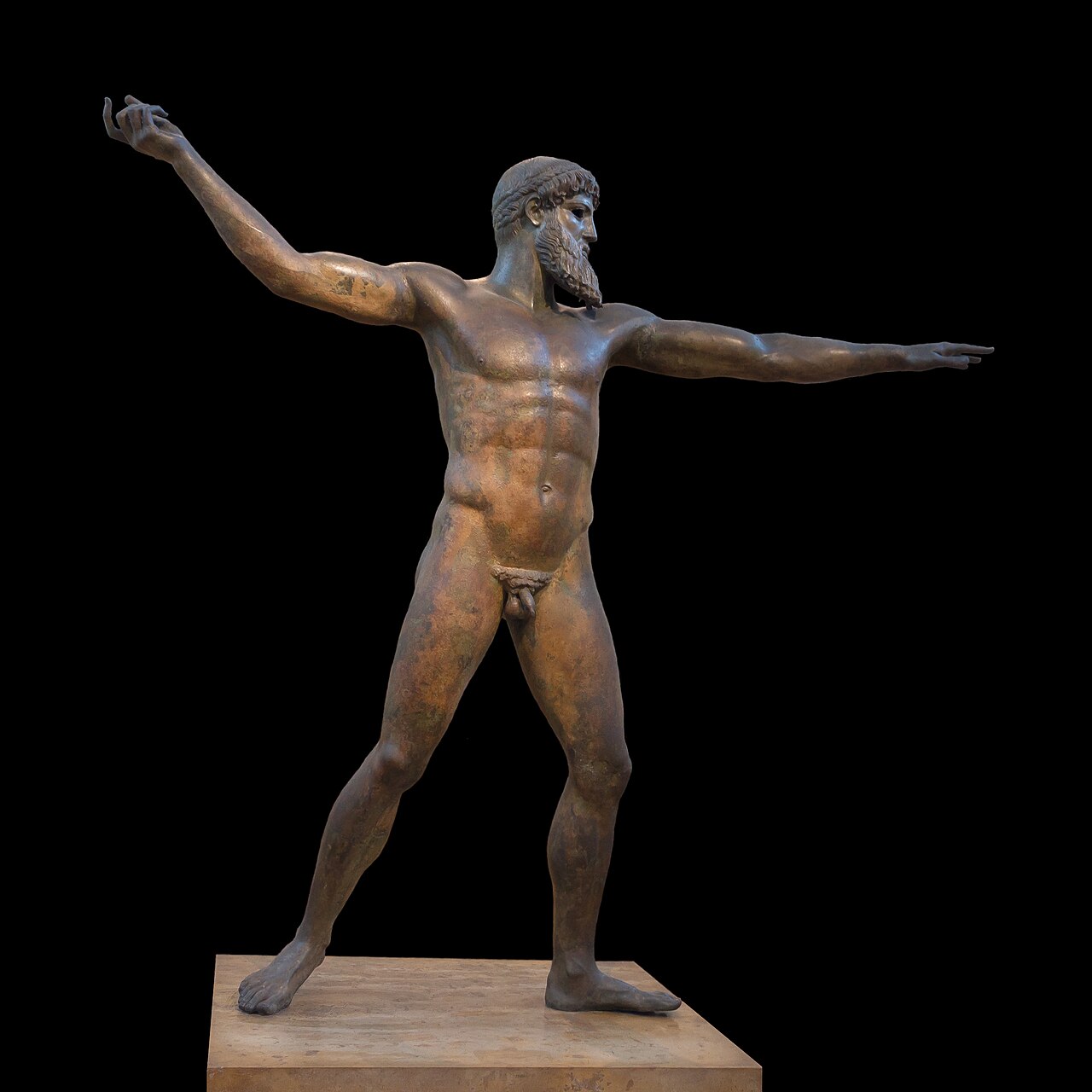
Poseidon was one of the three sons of Kronos and Rhea who claimed the major divisions of the cosmos after the defeat of the Titans. His domain, the sea, was central to Greek civilization in a way difficult to overstate. The ancient Greeks were above all a maritime people: the Aegean Sea, studded with hundreds of islands, connected rather than divided the Greek world. Trade, colonization, fishing, warfare, and communication all depended on the sea. Poseidon, as its divine lord, was one of the most important gods in practical religious life, receiving prayers and sacrifices from sailors before every voyage.
His mythology is filled with the violence of the sea itself. He is the Earth-shaker, as earthquakes were attributed to him striking the earth with his trident, and the geological instability of the Greek peninsula (which lies on major tectonic fault lines) made this association vivid and credible. He is the father of monsters: his union with the Gorgon Medusa produced Pegasus and Chrysaor; he fathered the Cyclops Polyphemus (whose blinding by Odysseus earned Poseidon's lasting enmity); he produced the sea monster Scylla. His horses, the hippocampi, half-horse and half-fish, who drew his chariot beneath the waves, connect his dominion over the sea with his mysterious association with earthly horses and horsemanship, possibly reflecting the ancient belief that the horse was a creature of the primordial waters.
Poseidon competed with Athena for patronage of Athens in a famous myth. Each offered the Athenians a gift: Poseidon struck a rock on the Acropolis with his trident and produced a saltwater spring (or, in other versions, a horse). Athena offered the first olive tree, which the gods judged more useful. Athens chose Athena, and Poseidon in fury flooded the Attic plain. The myth encodes real historical tensions, maritime power (Poseidon) versus agricultural and intellectual civilization (Athena), and reflects the choice Athens ultimately made in its self-identity as a city of wisdom and arts rather than purely a naval power, even as its empire depended on exactly that naval power.
The great bronze statue recovered from Cape Artemision off the coast of Euboea, now in the National Archaeological Museum in Athens, captures the god at his most powerful: a massive, bearded figure with arms outstretched in the moment before hurling his weapon, with the balance and dynamism of an athlete rather than the static pose of earlier Greek sculpture. Whether it represents Poseidon or Zeus (the thrown weapon, now lost, could have been a trident or a thunderbolt) is still debated. Either way, it is one of the supreme achievements of Early Classical Greek bronze sculpture: a god caught in the act of cosmic violence, simultaneously destructive and beautiful.