Greek Medicine: From Divine Healing to Scientific Inquiry

Thomas L. Miller
Historian & Writer
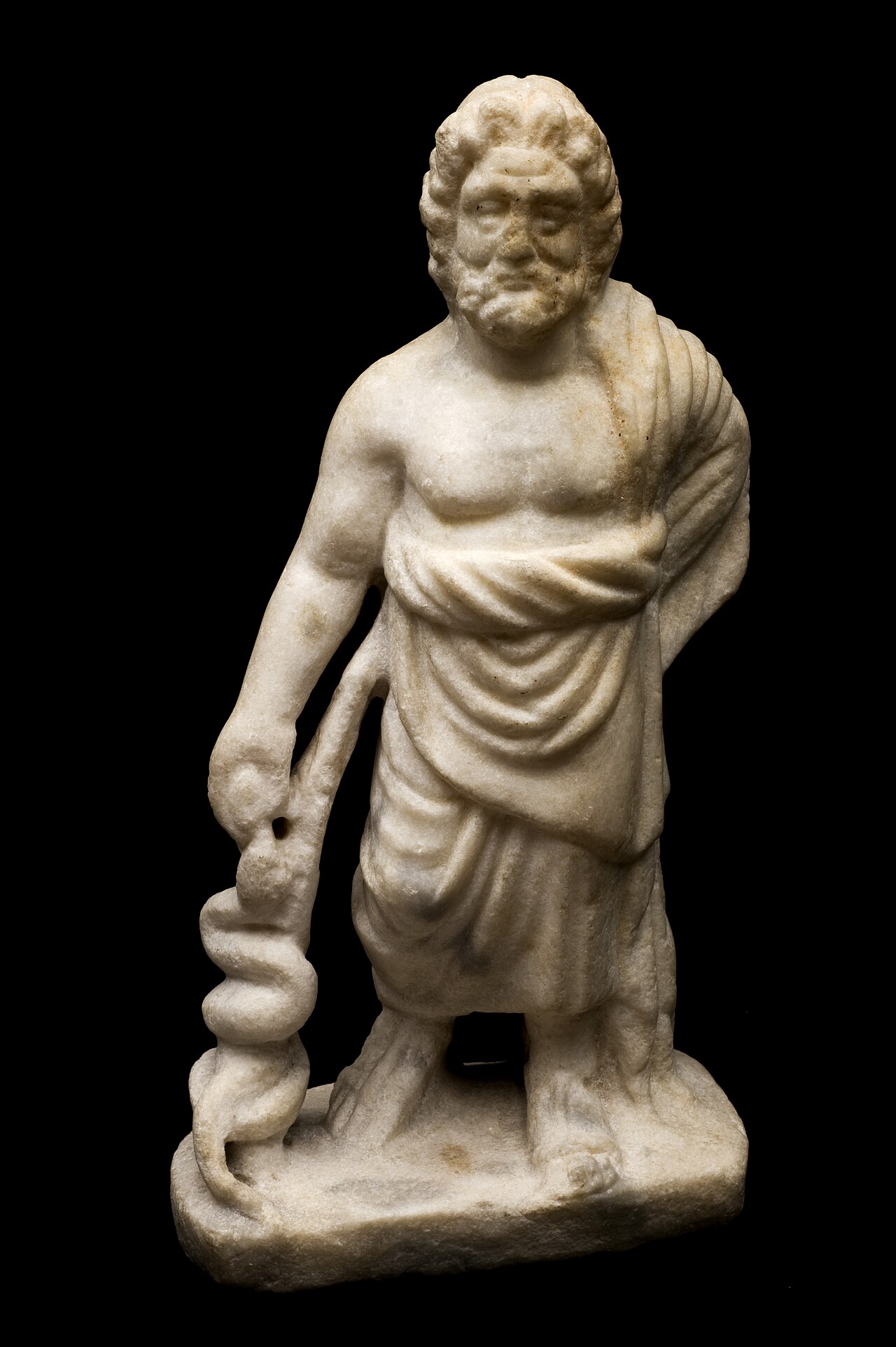
Greek medicine began, as most ancient medicine did, with the divine. Asclepius, son of Apollo and the mortal Coronis, was the god of medicine and healing. His cult centers, the Asclepieia, were sanctuaries where the sick came to seek divine healing, often through a practice called incubation: sleeping in the sanctuary and awaiting a healing dream in which Asclepius or his sacred serpents would appear and prescribe a cure. The Asclepieion at Epidaurus was the most famous, and votive offerings left by the healed, clay models of cured body parts and inscriptions describing miraculous recoveries, testify to genuine experiences of healing, whether through divine intervention, the therapeutic effects of rest and the sanctuary's peaceful environment, or the powerful placebo effects of religious belief.
The transformation from sacred to secular medicine occurred primarily through the figure of Hippocrates of Cos (c. 460–370 BCE) and the school of medicine that developed around him. The "Hippocratic corpus," a collection of approximately sixty texts attributed to Hippocrates and his school, represents the first systematic attempt to understand disease in natural rather than supernatural terms. The revolutionary claim is explicit: in "On the Sacred Disease" (a treatise on epilepsy, then attributed to divine possession), the author argues that epilepsy is no more sacred than any other disease and has natural causes in the brain. Disease, the Hippocratic writers insisted, follows natural laws and can therefore be understood through systematic observation, description, and logical inference.
The Hippocratic theory of disease rested on the doctrine of the four humors: blood, phlegm, yellow bile, and black bile. Health consisted of a proper balance of these humors; disease resulted from imbalance. Treatment aimed to restore balance through diet, exercise, rest, and sometimes purging or bloodletting. This theory was wrong in its specific claims but right in its fundamental orientation: disease has physical causes that can be observed, categorized, and treated systematically. The Hippocratic emphasis on careful clinical observation, recording symptoms, tracking the course of illnesses, noting which treatments worked, laid the foundation for empirical medicine. The Hippocratic Oath, in various adapted forms, is still taken by physicians today; its core principle of "first, do no harm" (primum non nocere, actually a later Latin formulation) remains central to medical ethics.
Galen of Pergamon (129–216 CE), working under the Roman Empire, synthesized and extended the Greek medical tradition into a comprehensive system that dominated European and Islamic medicine until the Scientific Revolution. He performed extensive anatomical research on animals (human dissection was generally prohibited) and produced detailed accounts of physiology, pharmacology, and pathology. His works remained standard medical texts in European universities until the sixteenth century, when Andreas Vesalius's direct anatomical observations began correcting Galen's errors. The arc from Asclepius's temple healers to Hippocratic empiricism to Galenic systematic medicine to the Scientific Revolution is continuous. Greek medicine was the first chapter in the long story of humanity understanding the body through reason rather than prayer.