Odysseus: Ten Years of Wandering the Ancient Sea

Thomas L. Miller
Historian & Writer
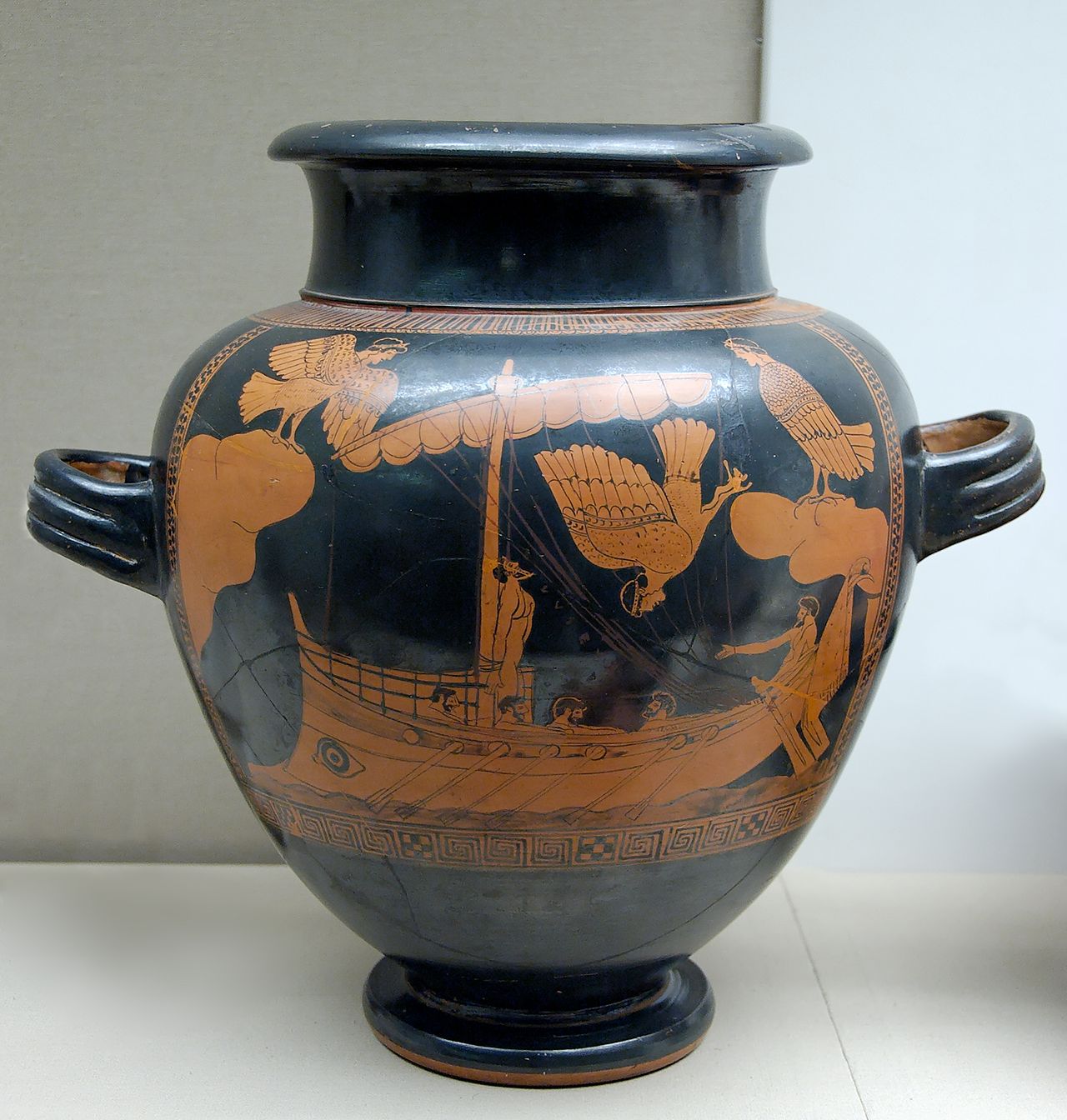
The Odyssey begins where the Iliad ends, with Troy in ashes, but it tells a completely different kind of story. Where the Iliad is a poem of war, community, and public heroism, the Odyssey is a poem of individual cunning, survival, and the longing for home. Odysseus (Ulysses in Latin) is the archetypal "man of many turns," polytropos in Greek: adaptable, resourceful, and endlessly inventive. His journey home from Troy to Ithaca, a voyage that takes ten years, is a map of the known and imagined ancient Mediterranean world.
The obstacles Odysseus faces form a catalogue of mythological marvels. He blinds the Cyclops Polyphemus, son of Poseidon, earning the sea god's permanent enmity. He spends a year on the island of the enchantress Circe, who transforms his men into pigs. He descends to the underworld to consult the prophet Tiresias. He sails past the Sirens whose song drives sailors to their deaths, strapped to the mast so he can hear the music without succumbing. He navigates between Scylla, a six-headed monster, and Charybdis, a monstrous whirlpool. His men slaughter the sacred cattle of the sun god Helios and are destroyed by a thunderbolt. Odysseus alone survives, washed ashore on the island of the nymph Calypso, who holds him for seven years.
The Odyssey is remarkable for what happens at home during the hero's absence. His son Telemachus grows from a boy to a man navigating the chaos of a household under siege by suitors who compete for his mother Penelope's hand, assuming Odysseus is dead. Penelope herself, weaving her famous shroud by day and unraveling it by night to delay choosing a new husband, is one of the great heroines of ancient literature: cunning in her own right, fiercely loyal, and resourceful against overwhelming pressure.
When Odysseus finally returns, disguised as a beggar, he finds his home occupied by over a hundred arrogant suitors. The climax, Odysseus stringing his great bow that no other man can bend and then systematically killing every suitor with his son and two loyal servants, is one of the most cathartic and violent scenes in ancient literature. Scholars have long debated whether Odysseus is a hero or an antihero: he lies constantly, he can be ruthless, and his curiosity sometimes dooms the people around him. But the poem insists on something deeper than moral simplicity: a portrait of a man whose defining quality is the refusal to stop trying, no matter what the gods or the world throws at him.