Perseus and Medusa: Cunning Over Brute Strength

Thomas L. Miller
Historian & Writer
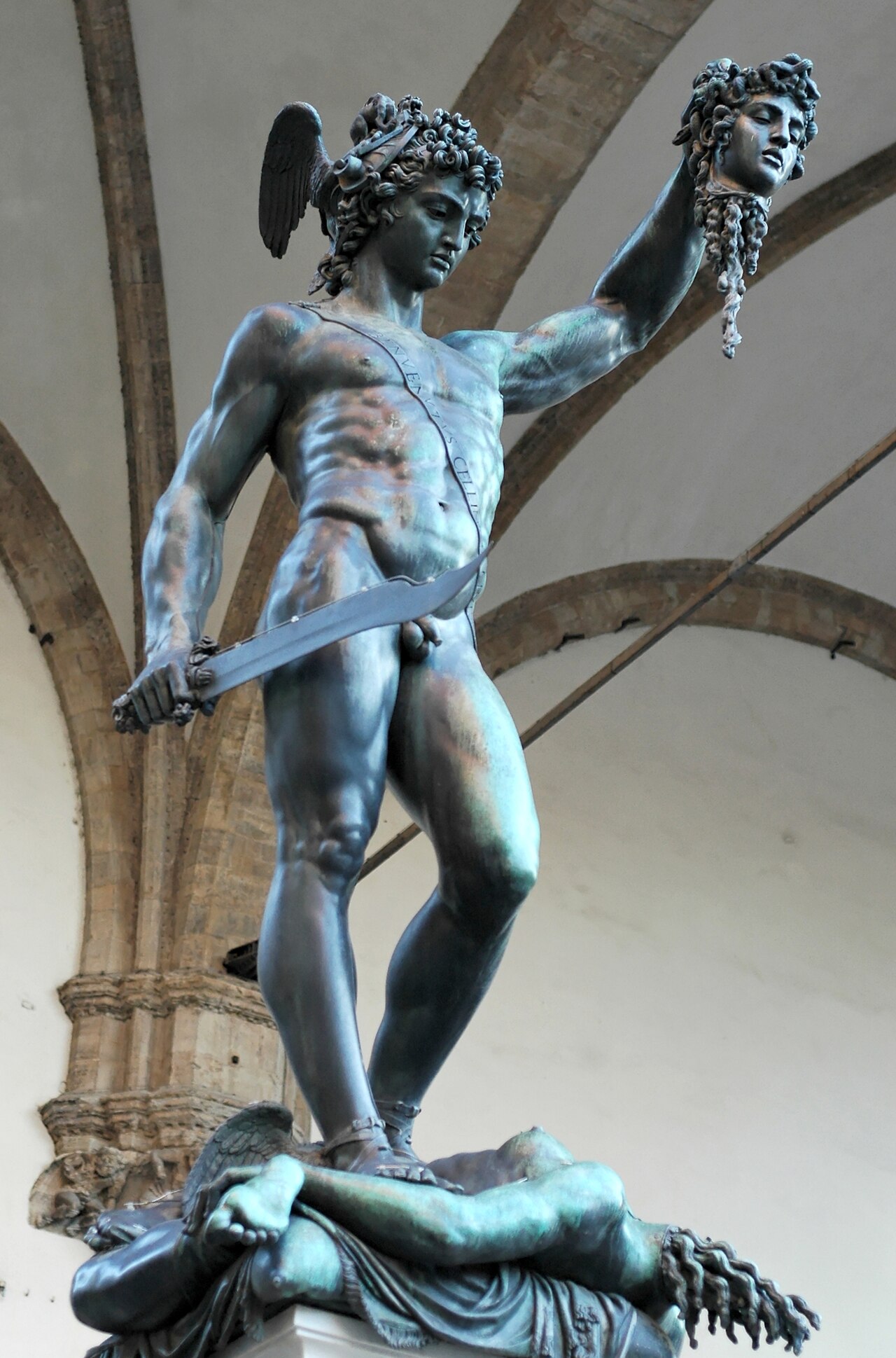
Perseus was the son of Zeus and the mortal Danae, princess of Argos. Her father Acrisius, warned by a prophecy that his grandson would kill him, imprisoned Danae in a bronze tower, but Zeus came to her as a shower of golden rain, and Perseus was born. Cast adrift at sea with his mother in a chest, Perseus eventually came ashore on the island of Seriphos, where he grew to manhood. When the island's king Polydectes desired Danae and sought to be rid of Perseus, he tricked the young hero into promising him an impossible gift: the head of the Gorgon Medusa.
Medusa was one of three Gorgon sisters, monstrous beings with snakes for hair whose gaze turned any living creature to stone. Unlike her sisters Stheno and Euryale, Medusa was mortal, but that was small comfort: any direct confrontation would be fatal. Perseus received divine assistance that changed the odds dramatically: Athena gave him a mirrored shield so he could see Medusa's reflection without looking directly at her; Hermes gave him a harpe (a curved sword or sickle) and winged sandals; the nymphs of the north provided him with a magical bag (the kibisis) to hold the head and a cap of invisibility. Armed with these gifts, Perseus flew to the lair of the Gorgons, approached Medusa while she slept, and beheaded her using the reflection to guide his stroke.
From Medusa's severed neck sprang two beings: the winged horse Pegasus and the golden giant Chrysaor, children she had been carrying after a union with Poseidon. Perseus grabbed the head, stuffed it in the bag, and fled pursued by the other Gorgons, escaping using the cap of invisibility. On his return journey, he encountered the chained princess Andromeda, offered as a sacrifice to a sea monster sent by Poseidon to punish her mother's boast that she was more beautiful than the Nereids. Perseus killed the monster, married Andromeda, and completed his journey home, where he used Medusa's head to rescue his mother by turning Polydectes and his court to stone.
The myth of Perseus is rich with symbolic meaning. The mirrored shield speaks to the Greek value of indirect knowledge: sometimes the truth can only be approached obliquely. The divine gifts represent the assistance that civilization (the gods) provides to the individual hero: weapons, transportation, protection, and strategy. The myth ultimately fulfilled its opening prophecy: at athletic games held later in Perseus's life, he accidentally struck and killed a spectator with a discus, who turned out to be his grandfather Acrisius. Fate, in Greek mythology, is not escaped by trying to escape it; the attempt to avoid the prophecy is precisely what sets it in motion.