Prometheus: The Titan Who Gave Fire to Humanity

Thomas L. Miller
Historian & Writer
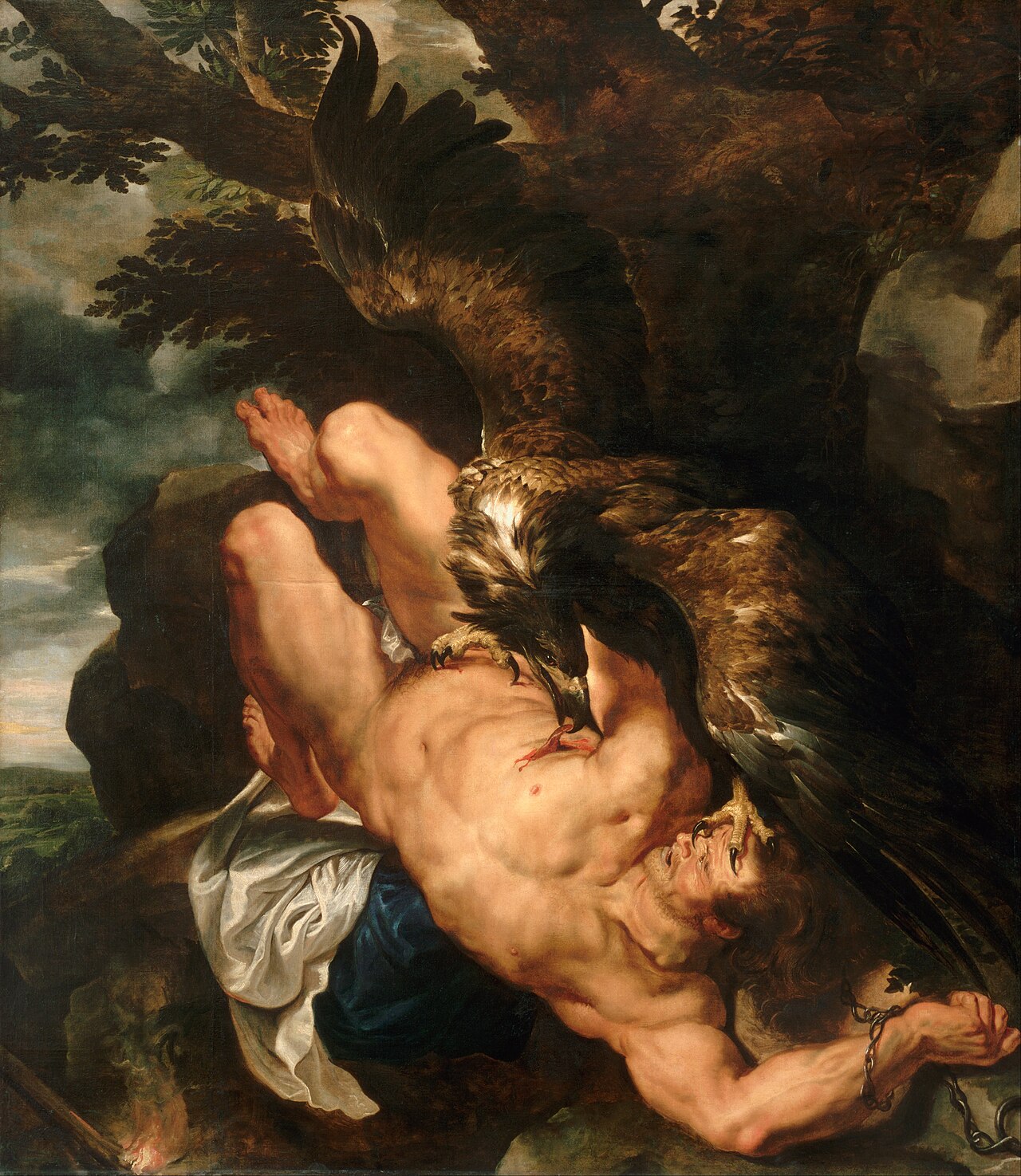
Prometheus belongs to the generation of the Titans, yet unlike most of his kin he sided with the Olympians during the Titanomachy. His name means "forethought" in Greek, and he was celebrated in antiquity as a master craftsman, a trickster, and above all a champion of human beings in their struggle for survival. His brother Epimetheus ("afterthought") was his foil, the one who acted first and thought later. Together, they were assigned the task of distributing qualities and abilities among the animals and humans of the newly created earth.
According to the most famous version of the myth, Epimetheus distributed all the useful animal qualities (speed, strength, shells, fur) before reaching the humans, leaving them defenseless and naked in a harsh world. Prometheus, unwilling to see humanity perish, stole fire from the forge of Hephaestus on Mount Olympus (or, in other versions, from the sun itself) and gave it to mortals. This single act transformed human civilization: fire meant warmth, cooked food, metalworking, pottery, and all the technologies that distinguish civilized life from mere animal survival.
Zeus's punishment was swift and merciless. Prometheus was seized and chained to a rocky crag in the Caucasus Mountains. Each day, an eagle, offspring of the monster Typhon, flew to him and ate his liver. Each night, because Prometheus was immortal, the liver regrew. This cycle of agony repeated without end, or so Zeus intended. The myth of Prometheus was elaborated most powerfully by the tragedian Aeschylus in his play Prometheus Bound, where the chained Titan rails against Zeus's tyranny and claims secret knowledge that Zeus will need to avert his own overthrow, giving him leverage even in torment.
Heracles eventually freed Prometheus during his Labors, shooting the eagle and breaking the Titan's chains, an act permitted by Zeus, who was pleased to see his son's glory increased. The story of Prometheus has resonated through Western culture as an archetype of the rebel who suffers for the benefit of humanity. Percy Bysshe Shelley's Prometheus Unbound recast him as the ultimate hero of human freedom. Mary Shelley's Frankenstein bears the subtitle "The Modern Prometheus," a story of the creator who oversteps divine boundaries and brings catastrophe. In the myth, the Greeks encoded a profound ambivalence: technology and knowledge bring civilization, but they also carry consequences that the gods, or nature itself, will exact in full.