The Trojan War: Where Myth Meets History

Thomas L. Miller
Historian & Writer
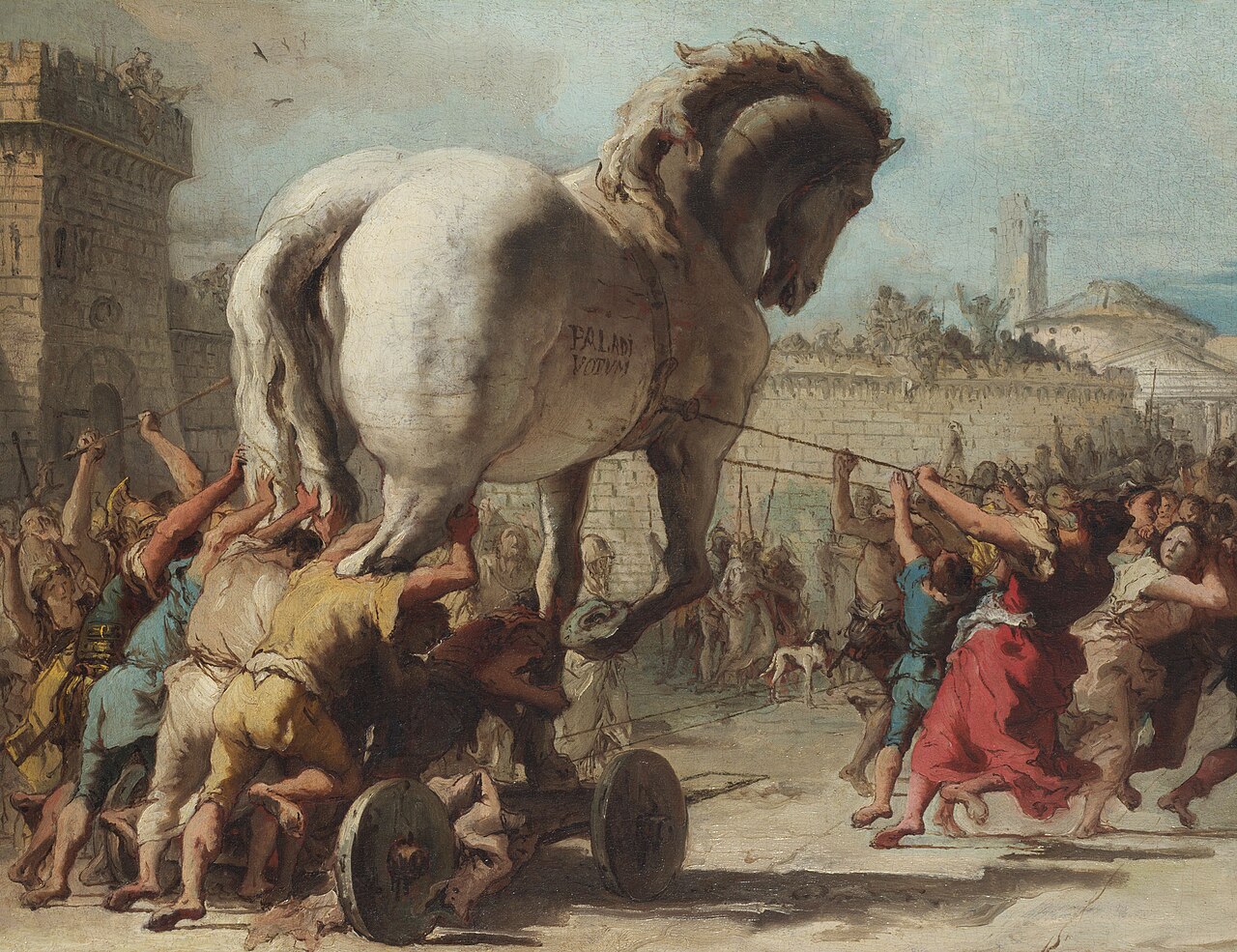
The Trojan War, as Homer tells it in the Iliad and the Odyssey, began with a golden apple and ended with a wooden horse. Paris of Troy, tasked with judging which of three goddesses (Hera, Athena, or Aphrodite) was most beautiful, chose Aphrodite after she promised him the most beautiful woman in the world. That woman was Helen, wife of King Menelaus of Sparta. When Paris took her to Troy (whether by abduction or elopement is itself contested), Menelaus called on all the Greek kings bound by oath to help retrieve her. A coalition of over a thousand ships and tens of thousands of warriors sailed for Troy, beginning a war that would last ten years.
The mythological elements are spectacular: gods and goddesses take sides and intervene directly in battle; Achilles is nearly invulnerable because his mother Thetis dipped him in the River Styx; the prophet Calchas guides Greek strategy; and the wooden horse, the trick devised by Odysseus, ultimately brings Troy's fall. For most of the nineteenth century, educated Europeans assumed it was all mythology. Then in the 1870s, the German businessman-turned-archaeologist Heinrich Schliemann excavated a mound called Hisarlik on the coast of northwestern Turkey and found the remains of multiple overlapping ancient cities. He was convinced he had found Homer's Troy, and he was at least partly right.
Modern archaeology has identified Troy VIIa as the most likely candidate for the city destroyed in the conflict, dating to approximately 1180 BCE, which aligns with the Late Bronze Age collapse, a period when many eastern Mediterranean civilizations fell in rapid succession. The site shows evidence of fire, destruction, and conflict consistent with a siege or sacking. Hittite tablets found in Anatolia mention a place called "Wilusa" (possibly Ilios, another name for Troy) and a king named "Alaksandu," perhaps Alexander, another name for Paris. These external references suggest that a city matching Troy's description existed and was politically significant during the period Homer describes.
The scholarly consensus today is nuanced: the Trojan War as Homer tells it is certainly mythologized and elaborated over centuries of oral tradition. But there very likely was a significant conflict involving the Greeks and a city at or near Hisarlik in the late Bronze Age, possibly a trade dispute, a political conflict, or a series of raids rather than a single ten-year war over a woman. Homer's genius was to take the raw material of historical memory, preserved through generations of bardic recitation, and shape it into a meditation on heroism, fate, and the terrible cost of glory. The history and the myth are inseparable, and that may be precisely the point.